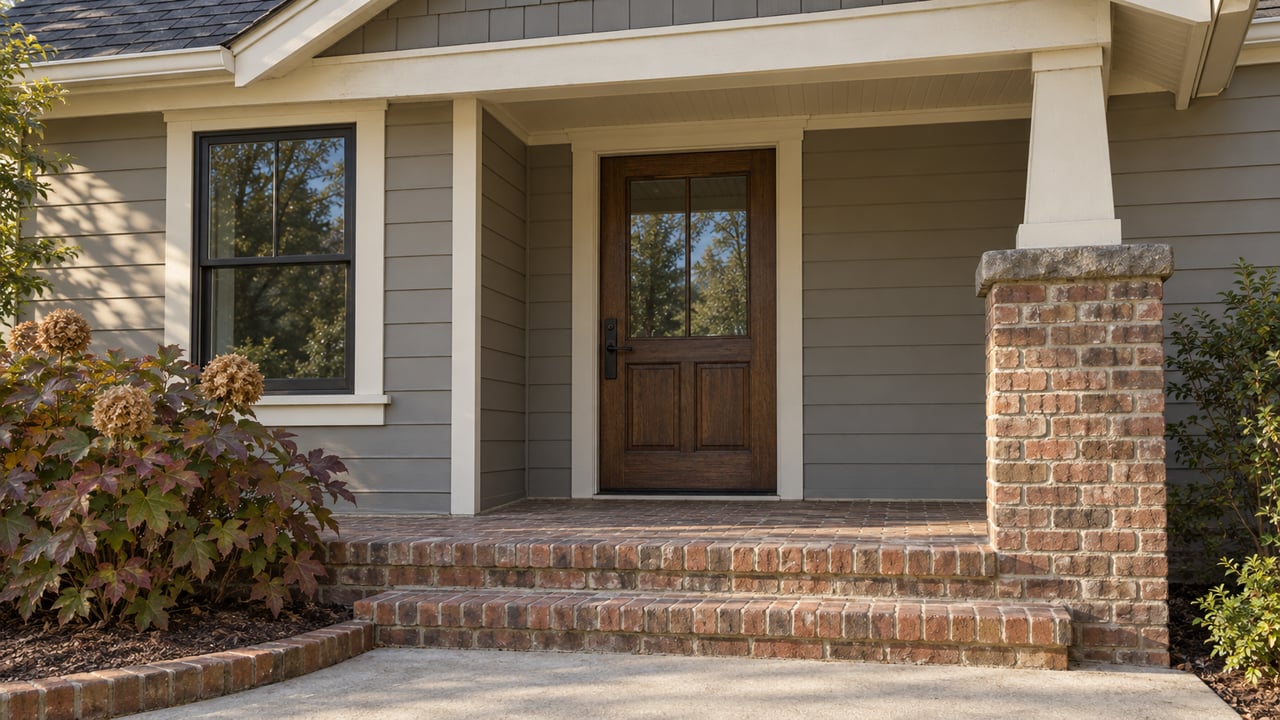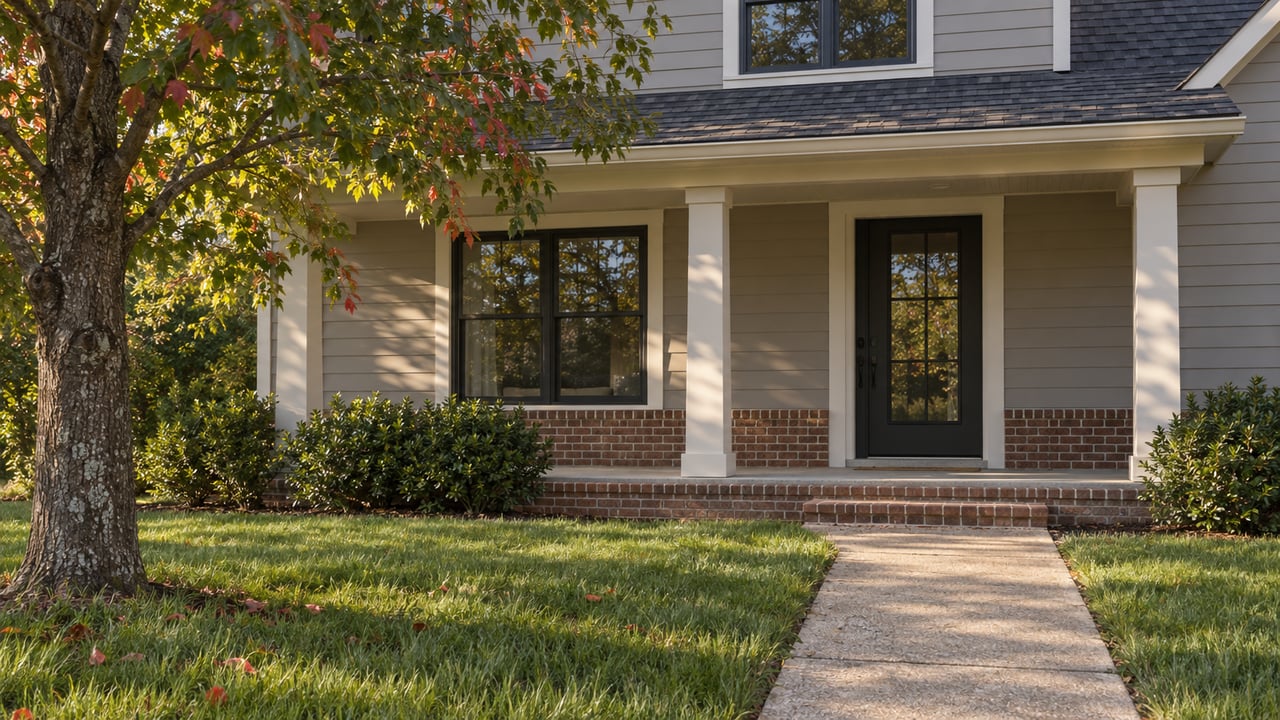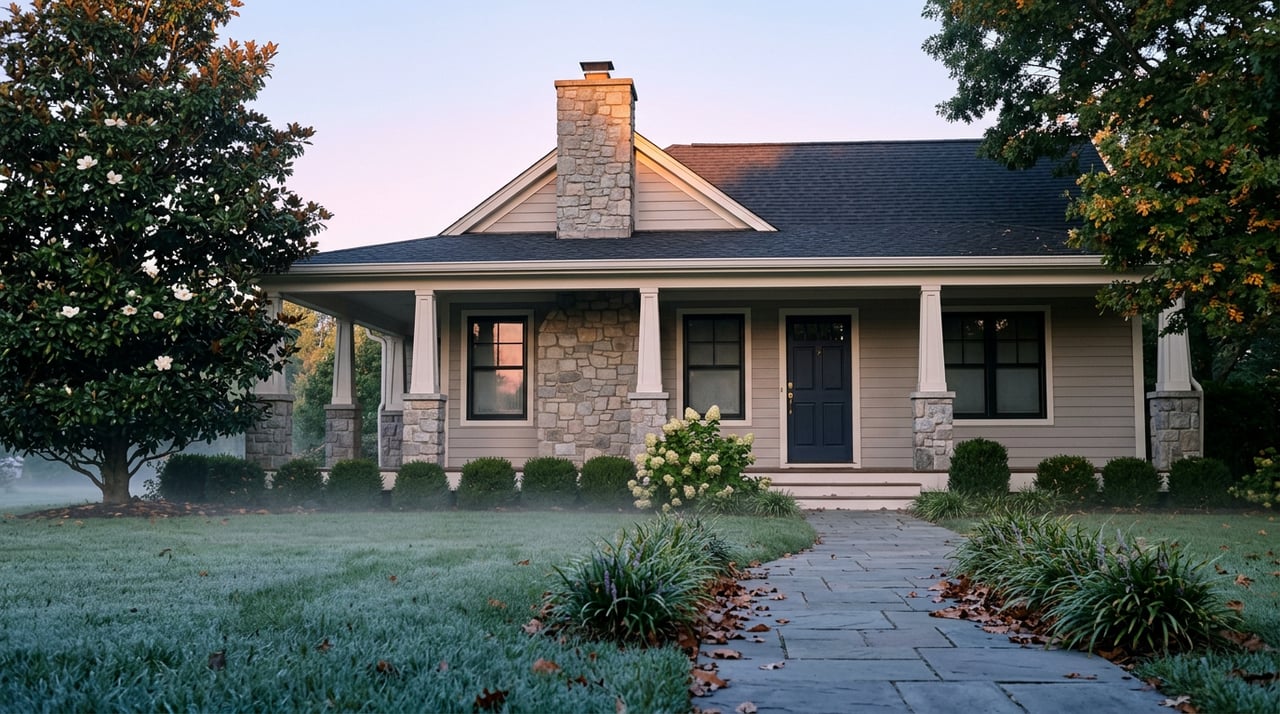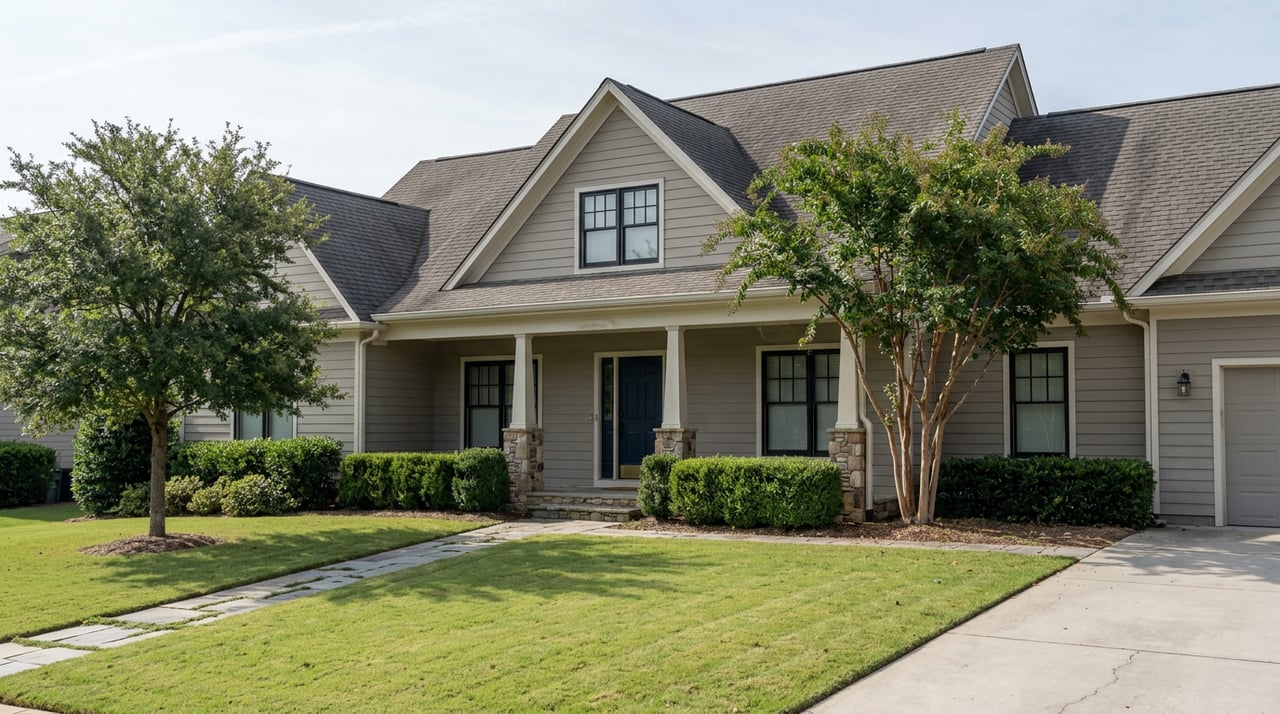
Stand at The Grounds, the old Philip Morris manufacturing site off Highway 49, and you're standing in the middle of the contradiction. Ten minutes northeast, past the new subdivisions crowding Poplar Tent Road, homes in planned communities like Afton Ridge and Christenbury go pending in under three weeks. Ten minutes the other direction, along Church Street and South Union Street near the historic courthouse, a well-built brick ranch from the 1960s can sit for three months without a serious offer.
Both of those homes get folded into the same citywide statistic. As of March 2026, Concord's median sale price stood at $375,000, down 3.8% from a year earlier, with homes taking an average of 91 days to sell. That single number is technically true and almost useless for anyone actually buying or selling here, because it's an average of two markets that don't behave the same way, don't move at the same speed, and aren't responding to the same demand.
The Number Everyone Quotes
A median works by finding the middle of a pile of sales. It doesn't care whether those sales came from a five-year-old subdivision with a homeowners association or a mill-era house that's never had its wiring updated. Concord has plenty of both, and lumping them together produces a figure that describes no actual house in the city.
The population growth underneath this makes the blending worse, not better. Concord's estimated population reached roughly 116,600 in 2026, up from about 105,240 at the 2020 census. That's not gradual infill. That's a substantial increase in residents, with new construction on one side of town while the older housing stock on the other side absorbs almost none of that demand. A citywide median can't show you which side you're standing on.
Two Corridors, Two Very Different Speeds
Here's where the numbers stop agreeing with each other in an interesting way.
| Sub-market | Price (median or average) | Year-over-year change | Time to sell or go pending |
|---|---|---|---|
| Cabarrus Country Club | $547,000 median, three months ending May 2026 | +19.1% | ~52 days |
| Zip 28027 (Afton Ridge, Christenbury, Winding Walk area) | $416,035 average, as of July 2026 | -0.8% | pending in ~18 days |
| Concord citywide | $375,000 median, March 2026 | -3.8% | ~91 days |
| Zip 28025 (older southern Concord) | $346,062 average, as of July 2026 | -0.9% | not separately reported |
| Center City Concord | $275,000 median, most recent Redfin reading | -5.2% | ~50 days |
Look at that table closely and the obvious story falls apart. If this were simply "the north side is booming and the south side is stalling," you'd expect prices to be climbing everywhere in 28027. They aren't. The zip code's average value actually slipped 0.8% year over year, roughly the same direction as the older 28025 zip on the other side of town.
What's genuinely different is speed. Homes in 28027 go pending in about 18 days. Center City Concord, despite a falling median, still moves in about 50 days. The citywide figure of 91 days is dragged upward by a specific kind of listing: older homes that need real system work and aren't competing on price against new construction, so they just sit. The split in Concord isn't primarily about which corridor is more expensive. It's about which corridor has buyers ready to act the moment a home is priced correctly, and which corridor is stuck waiting for a buyer willing to take on deferred maintenance.
That's the number a citywide median erases completely. Two homes can be losing value at nearly the same rate and still be having two entirely different experiences on the market, one clearing in under three weeks and the other tying up a seller's plans for a season.
The Facility and Concord's Local Context
Eli Lilly committed more than $1 billion and nearly 600 jobs to a new manufacturing facility in Concord, a plan the company and North Carolina's Department of Commerce announced together. By the time the plant held its ribbon-cutting in 2024, Lilly had doubled that commitment to roughly $2 billion, building the facility on the footprint of the old Philip Morris plant to produce injectable medications.
Elsewhere in Concord, newer subdivisions along Poplar Tent Road include master-planned communities like Afton Ridge and Christenbury, which have HOAs. The city also has local destinations such as Concord Mills, one of North Carolina's largest shopping and entertainment destinations, and Charlotte Motor Speedway, home to NASCAR's Coca-Cola 600 and Bank of America 400.
The Ceiling on the South Side
The older corridors face a different kind of math, and it isn't about desirability. It's about what a renovation actually returns once you account for what it costs.
A home built before 1980 near Church Street or South Union Street typically needs a full systems update, wiring, plumbing, sometimes the roof and HVAC together, before it can compete credibly against a five-year-old house in Afton Ridge. When the projected value after that work lands under roughly $220,000, the renovation cost commonly outruns what it adds once commissions, closing costs, and months of carrying expenses get counted. That's not a judgment about the neighborhood. It's arithmetic, and it's the reason a well-located older home can still take 90 days or longer to sell even in a city where the newer corridor is moving in under three weeks.
It also explains why two houses of the same size can price so differently. A home in Afton Ridge and a comparable home near South Union Street, both around 1,400 square feet, can land $80,000 to $100,000 apart, not because one lot is better than the other, but because one buyer pool is financing new construction and the other is pricing in a renovation they haven't started yet.
What This Means If You're Pricing a Purchase or a Listing
If you're buying, the citywide median tells you almost nothing about how fast you'll need to move. A well-priced home in the 28027 corridor can be gone before you've scheduled a second showing. A home near downtown with the same square footage might still be there in six weeks, giving you real room to negotiate on price or repair credits.
If you're selling an older home, the honest starting point is deciding whether you're competing on price against new construction or asking a buyer to absorb a renovation you haven't priced out. Sellers who skip that step and list at a citywide comparable price often find out the hard way why their home is sitting past the 90-day mark while a newer listing three miles away is already under contract.
Either way, the useful question isn't "what's Concord's median home price." It's "which of Concord's markets is this specific home actually in, and how fast do homes like it typically move once they're priced right."
FAQ
Is Concord currently a buyer's market or a seller's market? It depends entirely on which corridor you're asking about. The Poplar Tent, Afton Ridge, and Christenbury area is moving fast enough to favor sellers who price accurately. Older homes near downtown are sitting long enough that buyers have real negotiating room.
Does my zip code tell me which sub-market I'm in? Mostly, but not perfectly. Zip 28027 covers the newer northeast corridor, and 28025 covers older southern Concord, but both zips contain some mix. The property's build year and whether it competes against new construction matter more than the zip code alone.
What might the Eli Lilly plant mean for housing demand in the northeast corridor? The facility's hiring has been building toward its full workforce since production started in 2025. The figures here don't establish whether that hiring is increasing housing demand in the northeast corridor or how it might affect sales or prices.
If you're trying to figure out which side of Concord your next move actually belongs on, or you're sitting on an older home and want a straight answer about whether renovating makes financial sense before you list, Seema Jay can walk through the specific numbers for your address. Let's Connect.